
BUSINESS
Trump Offered Putin a Trade Prize to End Ukraine’s War
Trump pitched restored US-Russia trade on a one-hour call after Kyiv was hit, while Moscow held Donbas terms and denied any threat to Europe.

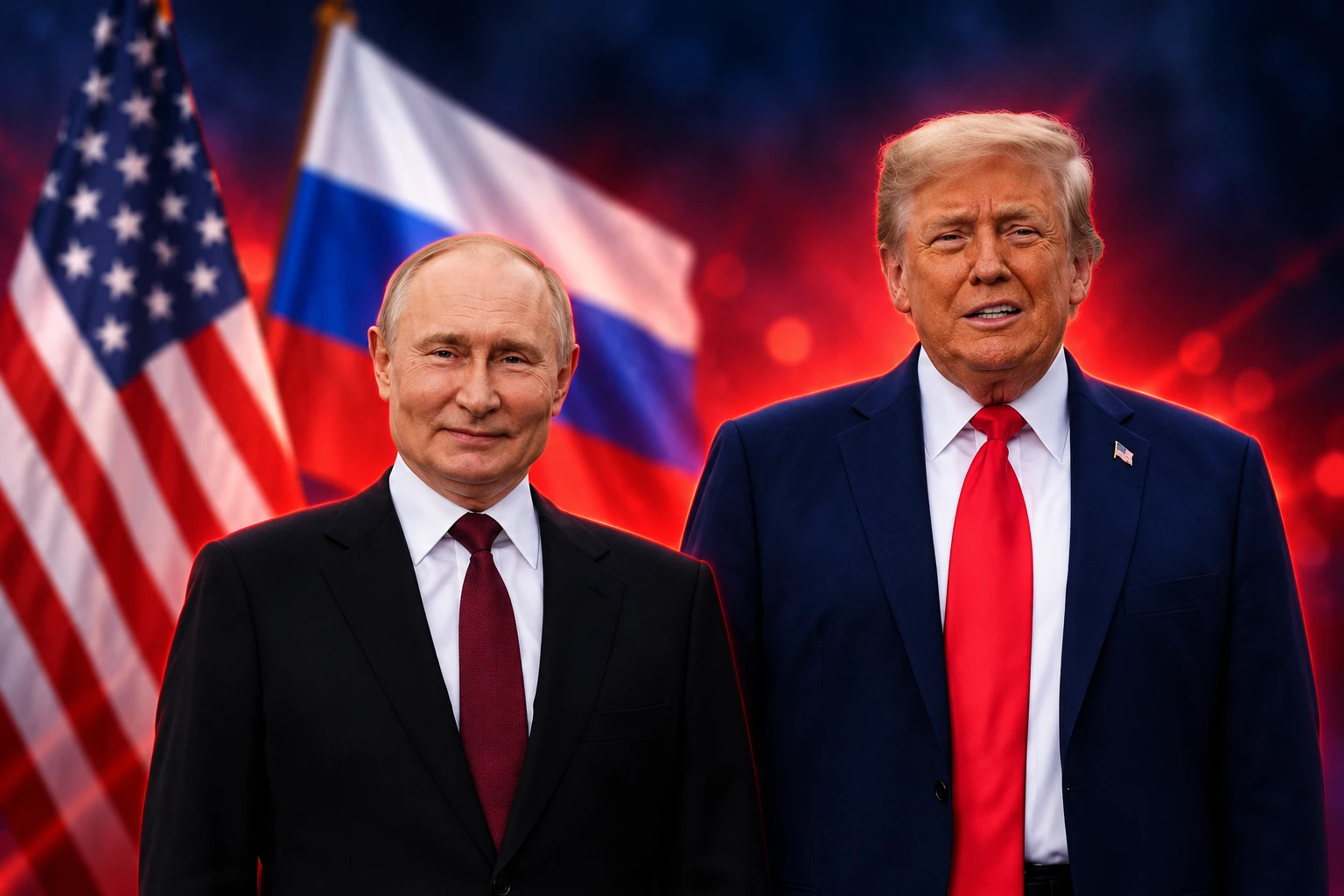
Yury Ushakov said Donald Trump and Vladimir Putin spoke for exactly one hour on Tuesday, September 8. Putin’s foreign affairs adviser called the talk constructive and quite frank. The White House did not confirm it.
Ushakov said Trump told Putin that ending the war as soon as possible would open prospects for full restoration of relations, especially trade, with huge benefits for both nations. Putin, he said, backed that approach as a path to a partnership between the two powers, then walked Trump through Russia’s view of the front and of how the war’s goals get met.
Trump Offered Trade as the Prize for Peace
The Kremlin is the only government that has described the call in any detail. Ushakov said the conversation was confidential and that he could not share many of the important points. The parts he did share put business restoration next to the fighting, not after it.
Donald Trump directly communicated the desirability of bringing the conflict to an end as soon as possible, as it would immediately open up prospects, impressive and far-reaching ones at that, for the full restoration of relations between the U.S. and Russia. In his view, this would have a particular impact on trade and economic ties, promising huge benefits for both nations. Donald Trump is keen to see a breakthrough achieved during his presidency.
Yury Ushakov, aide to the President of Russia, Kremlin commentary, September 8, 2026
Putin, Ushakov said, praised the mediation work by Trump and by the US team, then outlined “actual tangible actions that the Americans could take to expedite the cessation of the hostilities.” He did not list those actions in public. The two men agreed to keep working on prisoner exchanges and on the return of children, and Putin noted Melania Trump’s work on family reunions.
Steve Witkoff’s own write-up of the weekend trip listed officials from the National Security Council, the State Department, and the Treasury Department in Moscow and in Kyiv. Treasury does not sit in a ceasefire room by accident. The November 2025 US draft already pairs land terms with sanctions relief, a G8 invitation, Arctic minerals, and a US-Russia investment vehicle built from frozen Russian funds.
Anton Gerashchenko, a former adviser to Ukraine’s interior minister, put the offer in a harder line after the Moscow meeting. Moscow, he wrote, is offering the United States “business in exchange for war,” not peace in exchange for business: Arctic energy, lithium, nickel, rare earths, and a path back for American firms, in return for consent to a war that continues on Russian terms.
A Three-Day Pause, Then Ballistic Missiles
Witkoff and Jared Kushner met Putin in Moscow on September 5, then travelled to Kyiv on September 6 for their first official visit since the full-scale invasion. Before they moved, both sides agreed to a three-day no-shoot policy so the talks could take place. Putin limited the Russian halt to strikes on Kyiv. He rejected a wider ceasefire along the front.
The pause covered Saturday through Monday. Early on Tuesday, Russia hit the capital again.
THE FOUR DAYS THAT REOPENED THE TALKS
- September 5: Witkoff and Kushner meet Putin in Moscow and carry a revised US proposal. Russia orders a halt to strikes on Kyiv for three days and refuses a wider ceasefire.
- September 6: The envoys meet Volodymyr Zelenskyy in Kyiv in three rounds, later joined by national security advisers from the United Kingdom, France, and Germany.
- September 7: Witkoff writes that the trip produced “movement on scheduling additional trilateral talks.” The no-shoot window runs to the end of Monday.
- September 8: Overnight missiles and drones hit Kyiv. Trump and Putin then speak for one hour. The White House issues no readout.
Kyiv’s National Police said two people were killed and 10 were injured. Damage and falling debris were recorded in the Shevchenkivskyi, Holosiivskyi, Darnytskyi, Obolonskyi, Podilskyi, Solomianskyi, and Dniprovskyi districts. Fourteen apartment blocks were hit, along with a school, shops, an office building, cars, and the entrance to Tarasa Shevchenka metro station. The dead and most of the wounded were in Solomianskyi.
Andrii Sybiha, Ukraine’s foreign minister, wrote that Putin launched another attack on Kyiv “the moment the U.S. president’s peace envoys left.” He added, “His ballistic missiles speak louder than his words on diplomacy,” and asked partners for interceptors because stocks are critically low. Zelenskyy described a complex strike of ballistic missiles, cruise and anti-ship missiles, and jet-powered Shaheds.
Russian officials reported three people killed in the Bryansk and Kursk regions, with 13 wounded. Local authorities in Crimea said Ukrainian attacks killed about five people.
What Moscow Still Wants in Donbas
Russia again told the US team that Ukraine must leave Donbas, including land Ukrainian forces still hold. That demand sat at the center of the January and February talks in Abu Dhabi and is still the wall. Kyiv will freeze the current line and talk about land later. Moscow wants the rest of Donetsk handed over first.
Ushakov said Putin gave Trump “an objective and extensive analysis” of the war, “along with our vision of the overall progress on the battlefield and achieving the goals and objectives of the special military operation.” The language is the same one Moscow has used since 2022. The goals have not been met, and the Kremlin is not describing them as optional.
A November 2025 US draft, checked at the time with a Ukrainian official and a US official, already wrote the land math in American ink. Crimea, Luhansk, and Donetsk would be recognized as de facto Russian, including by the United States. Kherson and Zaporizhzhia would freeze on the line of contact. Ukrainian forces would pull out of the part of Donetsk they still hold, and that withdrawal zone would be a demilitarized buffer “internationally recognized as territory belonging to the Russian Federation,” with Russian troops kept out of it.
Ukrainian MP Anna Skorokhod said the terms brought to Kyiv this month were harder than earlier rounds, with a new demand for constitutional changes that concede territory. Zelenskyy, after the Sunday meetings, kept land at the leader level. “The territorial question remains a pressing one,” he said. “I will maintain my position that complex issues such as this are only resolved at the level of leaders.”
Europe Sat in the Kyiv Room Anyway
On the same call, Ushakov said, Putin told Trump that Russia has no aggressive plans against Europe. “In view of the speculations regarding Russia’s alleged hostile intentions against European states, it was stressed that no aggressive plans against Europe have ever entered our minds,” he said. “The circulated myths about the Russian threat serve as a pretext for Europeans to ramp up their support for Ukraine and their own military expenses.”
That line was aimed at the governments that had been in Kyiv two days earlier. National security advisers from the UK, France, and Germany joined the third round with Zelenskyy, Witkoff, and Kushner. They were not on the Tuesday phone call. The European threat denial went to Trump, who then, in the Kremlin’s telling, talked about trade with Moscow.
Zelenskyy came out of Sunday asking for a winter survival kit, not a victory parade. He said the war looks set to run into the cold months and that he had gone through a winter package of air defense and energy in detail with the Americans and with the European partners.
WHAT KYIV ASKED FOR BEFORE WINTER
- Air defense: More Patriot interceptors and a US plan to raise production next year, with Germany expanding licensed output, because ballistic missiles are the round Ukraine still struggles to stop.
- The grid: Direct support for power plants and the electricity system that Russia has spent successive winters trying to break.
- American LNG: Zelenskyy said Ukraine is counting on substantial volumes of US liquefied natural gas and on the ability to use them if fighting runs through the heating season.
He joked that having Witkoff and Kushner in the city “worked better than Patriot systems” and said he hoped they would visit more often so people could “live a little” without Russian attacks. The joke curdled within 36 hours.
The 28-Point Plan Never Left the Table
People close to the talks said Witkoff and Kushner carried revised versions of the earlier 27-point and 28-point drafts, updated after talks stalled in February, and that Washington was trying to revive old ideas more than invent new ones. An air truce, either over energy sites or over the whole sky, was one addition. Russia rejected it.
The November draft is still the clearest public map of what a Trump-branded settlement looks like on paper. It confirms Ukraine’s sovereignty, then caps the armed forces at 600,000 people, against a force a Ukrainian official put at 800,000 to 850,000. Ukraine would write a NATO ban into its constitution. NATO would write the same ban into its own statutes and keep troops out of Ukraine. European fighter jets would sit in Poland.
The money chapter is where the Tuesday call starts to sound like the document. Frozen Russian funds would be split: $100 billion into a US-led rebuild in Ukraine, with the United States taking 50 percent of the profits from that venture, and Europe adding another $100 billion. The rest of the frozen money would go into a separate US-Russia investment vehicle. Sanctions would come off in stages. Russia would be invited back to the G8. Washington and Moscow would sign a long-term economic deal covering energy, minerals, infrastructure, AI, data centers, and rare earth projects in the Arctic.
WHAT THE NOVEMBER PLAN STILL PUTS ON THE TABLE
| Issue | November 2025 US draft | What moved this week |
|---|---|---|
| Land | Crimea, Luhansk, and Donetsk recognized as de facto Russian, including by the US; Ukraine withdraws from remaining Donetsk into a buffer counted as Russian territory | Moscow again demanded Ukraine leave Donbas, including land it still holds |
| NATO | Ukraine’s constitution bars membership; NATO writes the same bar into its statutes | Unchanged Russian red line |
| Army size | Cap at 600,000 | Not settled in public |
| Frozen funds | $100 billion into a US-led rebuild (US takes 50% of profits); Europe adds $100 billion; remainder in a US-Russia vehicle | Treasury officials sat in both Moscow and Kyiv |
| Politics | Ukraine holds elections in 100 days; all sides get amnesty | Not part of the public weekend readout |
| Ceasefire | Takes effect after both sides pull back to agreed points | Three-day halt on the two capitals, then Tuesday’s strikes |
The draft also hands monitoring to a “Peace Council” headed by Trump, the same structure he has used for Gaza, and splits electricity from the Zaporizhzhia nuclear plant 50-50 under IAEA watch. A senior White House official said at the time that the plan was “not easy” for Ukraine and that if the war did not end, Ukraine would likely lose more land. Zelenskyy called it a US “vision,” not a final offer.
Alaska, Iran and a Six-Month Gap
Trump made ending the war a test of his second term and once said he could do it in 24 hours. He later called that an exaggeration. He hosted Putin in Alaska on August 15, 2025, Putin’s first visit to US soil since 2015, and said they had been through “a hell of a lot” together. No ceasefire came out of Anchorage. In June, Putin said “there were indeed no agreements reached in Anchorage.” Secretary of State Marco Rubio said that if there had been an agreement, the war would have ended, and that Russia still wanted all of Donetsk “among some other things.”
US, Russian, and Ukrainian teams met in Abu Dhabi in late January and again in early February, then in Geneva in February. Those rounds broke on the same land question. About 10 days after Geneva, American strikes on Iran began, and the Ukraine file went dark. No talks between the two warring sides ran from then until this month, a gap of about six months.
The leaders had kept a separate phone channel. Ushakov said in March that they had gone some time without a call after their previous call at the end of December, then spoke for about an hour with Iran first on the agenda and Ukraine after it. They spoke again in June, on Trump’s birthday. Tuesday’s hour was another turn of that private wheel, with the public work still stuck where it was in February.
Zelenskyy Wants a Winter Package and a Meeting
After Sunday’s sessions Zelenskyy thanked Trump for “allowing them to come” and said Ukraine had “been waiting a long time for Steve and Jared, Witkoff and Kushner.” He also said ending the war matters, and that security guarantees have to be “strong and clear” because the army itself is the core guarantee and that army needs resources. He hopes to see Trump around September 20, when the UN General Assembly meets in New York, and to talk Patriot batteries as well as a settlement.
Witkoff, posting for the envoy’s office on September 7, called the weekend “substantive progress” and said more three-way talks were being scheduled. He wrote that Trump is “working hard to stop the killing.”
At President Trump’s direction, United States negotiators visited both Moscow and Kyiv in order to facilitate additional dialogue to end the Russia-Ukraine War. Ahead of the trip, the Russians and Ukrainians agreed to a three-day no-shoot policy to enable these discussions to… pic.twitter.com/7oj7C2Qp2p
— Special Envoy Steve Witkoff (@SEPeaceMissions) September 7, 2026
Win-win language around that post treats the invasion as a deal with two clients. It is not. Russia launched a full-scale war in February 2022, more than four and a half years ago, and is still trying to take land it has not seized. A three-day hush over two capitals is a courtesy to envoys, not a ceasefire. Trump’s term runs through 2029, and Ushakov said he wants a result inside that window. Putin can wait on the clock Trump just advertised, as long as the commercial door stays open and Donbas stays the price of walking through it.
The White House still has not described the hour. Ushakov said the two presidents will speak again if the need arises. In Kyiv, the need on Tuesday morning was interceptors, not another readout from Moscow.

The Wilderness Croajingolong Protects Is a Colonial Fuel Load

Trump Rules Out a Bioweapon as Moscow Hides the Germ

Eva Marie Saint, Last Waterfront Witness, Dies at 102

Luminar’s Full Editor Comes Free for a Year on Googlebook

Sicario 3 Advances After the Original Stars Pick the Team

Sharon AI Walks an $8.8 Billion Book Into Goldman

Cash Still Buys Nearly One in Three U.S. Homes

The Agent Harness Turns Safety Into Switching Cost

Congo Rolls Out Ervebo Against a Different Ebola Virus

CDC Holds Pennsylvania Measles Deaths Off the U.S. Tally
-
 NEWS2 months ago
Sharon AI Walks an $8.8 Billion Book Into Goldman
-
 BUSINESS2 months ago
Cash Still Buys Nearly One in Three U.S. Homes
-
 NEWS2 months ago
The Agent Harness Turns Safety Into Switching Cost
-
 LIFESTYLE2 months ago
Congo Rolls Out Ervebo Against a Different Ebola Virus
-
 NEWS2 months ago
CDC Holds Pennsylvania Measles Deaths Off the U.S. Tally
-
 NEWS2 months ago
Tropical Storm Edouard Left Houston Open and Beaumont Dark
-

 NEWS2 months ago
Nationwide Bets on Data Work Before It Trusts Agents
-
 BUSINESS2 months ago
Copper’s Longest Rally Since 1994 Sits in U.S. Warehouses