
NEWS
FDA Closes Record Cyclospora Outbreak Probe With No Pathway
FDA found Cyclospora in water at Taylor Farms de Mexico and a grower’s ditch, then closed the 12,883-illness outbreak with no contamination path.

The FDA closed the largest known U.S. cyclosporiasis outbreak investigation on October 2 after finding the parasite in water at Taylor Farms de Mexico. Inspectors also recovered it from a drainage ditch at an iceberg grower identified in the traceback. The agency said it still cannot say how contamination reached the lettuce that sickened 12,883 people in 21 states.
That is the same ending this plant has had before. In 2013, FDA walked Taylor Farms de Mexico in Doctor Mora, Guanajuato, after salad mix from the site was tied to restaurant clusters in Iowa and Nebraska, and left without a pathway. The 2026 close finds the parasite in water and still names no route onto the crop.
Inspectors Found the Parasite in Water, Not Lettuce
The agency closed its outbreak investigation on October 2, three weeks after CDC declared the outbreak over on September 11. Traceback had pointed to several farms and one processing plant in central Mexico that supplied shredded iceberg lettuce distributed by Taylor Fresh Foods.
Working with Mexican officials, inspectors sampled water, soil, sediment, and iceberg lettuce. Two samples tested positive for Cyclospora. One came from a tank that held outgoing wastewater at the Taylor Farms de Mexico plant. The other came from a drainage ditch at an iceberg lettuce grower in the traceback. No lettuce sample was positive.
While there is currently not enough evidence to conclusively determine how contamination occurred in this outbreak, the positive samples show that Cyclospora was present in the environment where lettuce was grown and processed.
Food and Drug Administration, October 2, 2026 investigation update
Genotyping of both environmental samples is done. FDA is still comparing those results with specimens from patients. A July 18 border sample that had been called positive was withdrawn the next day as a false positive, and it was never the basis for the recall.
WHAT WE KNOW
- The water hits: Cyclospora was in outgoing wastewater at the plant and in a grower’s drainage ditch.
- The product tests: FDA reported no confirmed positive lettuce sample from the Mexico inspections.
- The epidemiology: Traceback and patient interviews still converge on recalled shredded iceberg from Taylor Farms de Mexico.
WHAT IS UNCONFIRMED
- The pathway: FDA says there is not enough evidence to say how the lettuce was contaminated.
- The match: It has not said whether the Mexico samples genetically match the patients.
- The named farm: The grower with the positive ditch has not been identified in the public update.
Susan Mayne, who formerly directed FDA’s food-safety center, said finding the parasite in water months after the contamination event shows why agricultural and processing water needs regular testing, and that a positive still leaves the harder question of how to treat that water.
A Taylor Fresh Foods spokesperson said the sample FDA cited came from discharged waste and sewer water outside the processing facility, and repeated the agency’s line that the evidence is not enough to say how contamination occurred. Dropping an unnamed independent grower does not explain a positive tank on the plant’s own outgoing waste line.
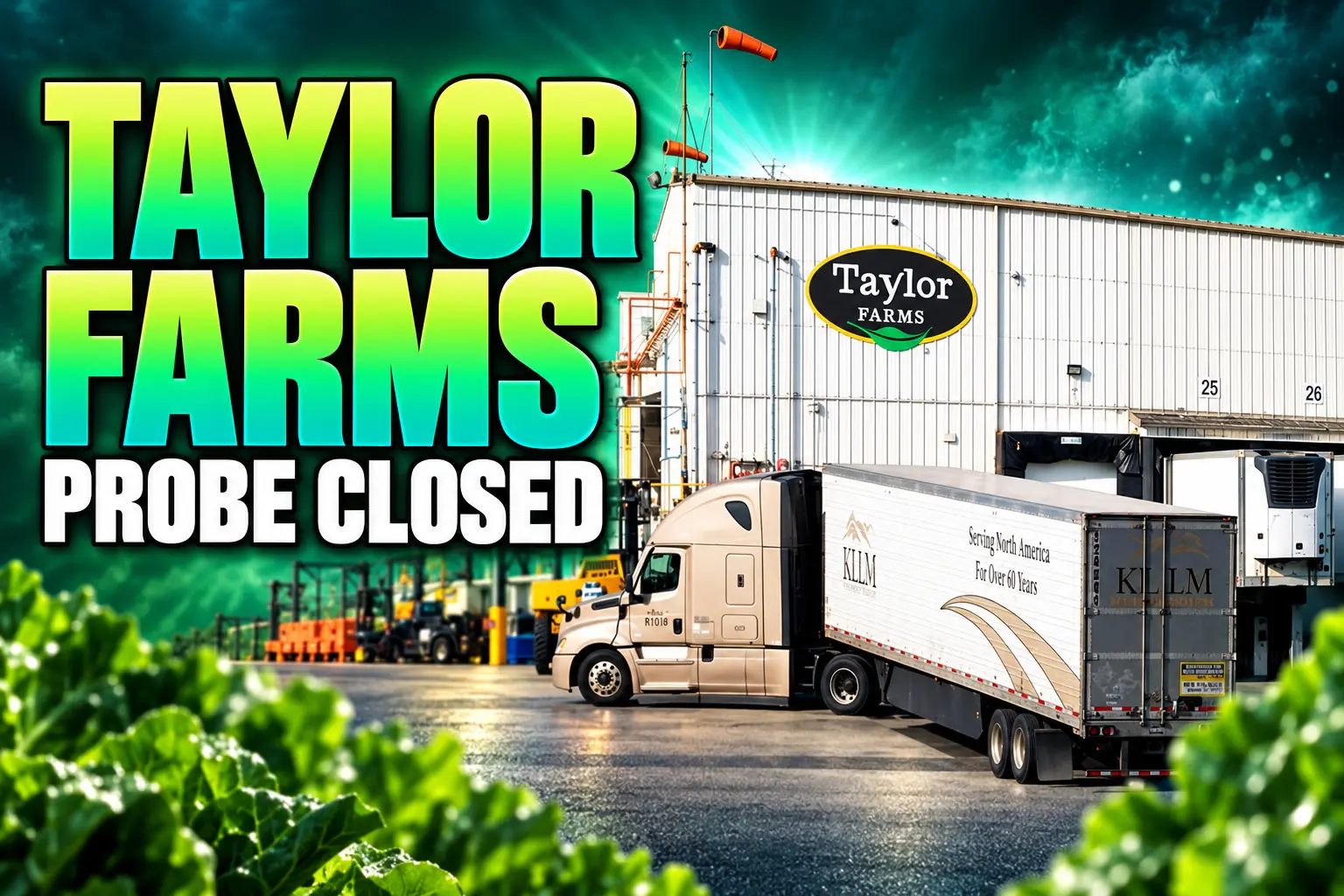
The Same Guanajuato Plant Sat Here in 2013
Taylor Farms de Mexico is not new to this parasite. In 2013, restaurant-associated cases in Iowa and Nebraska were traced to a salad mix of iceberg, romaine, red cabbage, and carrots supplied to Olive Garden and Red Lobster by the same company, at the same Doctor Mora operation in Guanajuato. CDC recorded 631 cyclosporiasis cases from 25 states that summer, with more than one vehicle in play nationally, including cilantro from Puebla.
FDA, CDC, Mexican officials, and the company ran an environmental assessment at the Guanajuato facilities from August 12 to 19, 2013. The team reported that conditions and practices observed at the time matched known food-safety protocols. Combined sampling of product, water, and the environment, including hundreds of employee stool samples from on-ranch toilets, did not yield the outbreak pathogen. Taylor Farms de Mexico suspended salad-mix and leafy-green shipments to the United States as of August 9, 2013. The assessment did not identify a significant source or route onto the mix.
Thirteen years later the vehicle is shredded iceberg, the customer list is different, and the laboratory result is stronger: the parasite is in the water around the crop and the plant. The close still cannot name the step that put it on the lettuce. Humans are the only known host. The oocysts arrive with feces in water or soil, then stick to produce that is eaten raw. Chasing a commodity, as CDC has noted across decades of U.S. outbreaks, has never once solved the water.
12,883 Illnesses Rode In on Shredded Iceberg
FDA’s final outbreak tally is 12,883 illnesses, 570 hospitalizations, and two deaths, with the last illness starting on August 17. Those deaths are the same two counted in CDC’s season total. The 21-state cluster was the largest piece of a much bigger year.
CDC has logged 19,883 laboratory-confirmed cases this season acquired in the United States with onsets from May 1 through August 31, in 49 states plus the District of Columbia. That is about 17 times the 1,180 cases reported in the same window in 2025. The lettuce outbreak accounts for nearly two-thirds of the 2026 season count. Season-wide, CDC lists 1,064 hospital stays. Median age was 46. Fifty-six percent of patients were female. Median onset was July 8.
CDC’s onset curve for all U.S. cases, which includes this outbreak, shows more than 1,000 new onsets a day from July 6 through July 11, peaking at 1,690 on July 10, a week before the recall. Michigan and Ohio sit in CDC’s highest mapped bands, 4,000 to 6,999 confirmed domestic cases each. True illness counts run higher because many people recover without a Cyclospora-specific stool test, and CDC says it takes about six weeks from first symptoms to a completed federal case report.
THE 2026 COUNT AGAINST LAST YEAR
| Measure | May-August 2025 | 2026 U.S. season | Lettuce outbreak |
|---|---|---|---|
| Lab-confirmed cases | 1,180 | 19,883 | 12,883 |
| Hospitalizations | n/a | 1,064 | 570 |
| Deaths | n/a | 2 | 2 |
| Geography | United States | 49 states plus D.C. | 21 states |
Most people get watery diarrhea, cramps, bloating, nausea, and fatigue. Symptoms can fade and then return. People with weak immune systems can stay sick longer and need closer care. CDC stopped weekly updates of the season page on September 15 after recent infections fell off, and it still warns that late reports from earlier in the summer will keep arriving.
Taco Bell, Walmart and a July 17 Recall
FDA and CDC first announced a multistate iceberg investigation on July 16. The next day, traceback had converged on Taylor Farms de Mexico, and the company started a voluntary recall of all iceberg sourced from central Mexico. Most outbreak illnesses began before that date.
Taco Bell was the first restaurant name in the public traceback, after state interviews found shredded iceberg on a high share of ill diners’ tickets. The chain stopped using Taylor Farms de Mexico lettuce as of July 17. Recalled Marketside bags also sat on Walmart shelves: Iceberg Salad in 12-ounce and 24-ounce packs with best-if-used-by dates from July 18 to August 3, and shredded lettuce in 8-ounce and 16-ounce packs with the same date window.
WHERE THE RECALLED ICEBERG WENT
- Food service: Distribution from June 29 through July 16 was confirmed in 31 states, from Alabama to West Virginia, with possible further movement into D.C., Puerto Rico, and several smaller states.
- Retail: Marketside product was sold at select Walmart stores in 15 states, clustered in the South and Midwest.
- The plant: Taylor Farms said Friday it has not reopened the central Mexico facility since production was suspended in July, while it works on “enhanced safety protocols from the field to the facility.”
- The grower: The independent farm tied to the positive ditch is “no longer part of our supplier program,” the company said.
- A written report: An Outbreak Investigation Report will sum up the iceberg file, the factors that may have put Cyclospora on imported shredded lettuce, and recommendations for the next season.
- Water and workers: Expert panels will take up worker health and hygiene, water and wastewater monitoring, and gaps in growing and processing practice.
- Faster labs in Mexico: FDA wants in-country capacity to collect and analyze Cyclospora samples, to cut the wait for a final result.
- One genotype method: Work with CDC to align typing so clinical, food, and environmental samples can be compared faster.
- Importer checks: More Foreign Supplier Verification Program inspections, with Cyclospora treated as a hazard importers must actually verify.
- Rules they can teach: More outreach on the Produce Safety Rule, Preventive Controls, and the Food Traceability Rule, the last of which they may not enforce before July 20, 2028.
-

 NEWS4 weeks ago
Sharon AI Walks an $8.8 Billion Book Into Goldman
-

 NEWS4 weeks ago
The Agent Harness Turns Safety Into Switching Cost
-

 BUSINESS4 weeks ago
Copper’s Longest Rally Since 1994 Sits in U.S. Warehouses
-
 NEWS1 month ago
Tropical Storm Edouard Left Houston Open and Beaumont Dark
-

 BUSINESS1 month ago
Cash Still Buys Nearly One in Three U.S. Homes
-
 NEWS4 weeks ago
CDC Holds Pennsylvania Measles Deaths Off the U.S. Tally
-

 LIFESTYLE1 month ago
Congo Rolls Out Ervebo Against a Different Ebola Virus
-

 NEWS4 weeks ago
Nationwide Bets on Data Work Before It Trusts Agents
FDA later classified the recall as Class I, its highest, after the case count and two deaths. Best-by dates have passed. The agency says it is confident the recalled iceberg is off the market in stores and restaurants. The spokesperson added that the company remains concerned for the people and families hit by the outbreak, and that “trust is earned by what we do.”
The Traceability Rule Remains Frozen Until 2028
FDA announced on August 20 that onsite inspections and sampling had begun at iceberg growers in Mexico, about a month after the recall. By then the lots that made people sick were already past their dates. Cyclospora investigations almost always run that race against a short shelf life, which is why lot-level records, produced in a day, were written into federal law.
The Food Traceability Rule, Section 204 of the Food Safety Modernization Act, was finished in 2022 with a compliance date of January 20, 2026. Leafy greens, fresh and fresh-cut, sit on the Food Traceability List. Shredded iceberg is the product the rule was built to follow. FDA later proposed pushing compliance 30 months, to July 20, 2028. Congress then directed the agency not to enforce the rule before that date, and FDA has said it intends to comply.
Until then, traceback still depends on whatever records a restaurant, a distributor, and a grower will hand over, on their own clocks. The 2026 file did converge, and it converged on a company and a region rather than on a shopper-facing lot code the week people started getting sick. Outreach on a rule the agency may not enforce is on the 2027 to-do list. Enforcement is not.
FDA Listed Ten Jobs Before the Next Harvest
On the same day it closed the lettuce file, FDA posted ten planned activities before the 2027 season. Senior U.S. and Mexican officials had already met the week of September 8 on prevention under the two countries’ food-safety partnership. Acting Deputy Commissioner Donald Prater had already sent industry a September 11 letter reminding growers, packers, importers, and retailers of water, hygiene, and supplier-verification rules already on the books.
The new list is shorter-term. It is also a catalog of the holes this summer exposed.
WHAT FDA SAYS IT WILL DO BEFORE 2027
Donald Schaffner, a food-science professor at Rutgers, said when CDC closed the outbreak in September that he does not think the tools and technologies now in use are enough to stop outbreaks like this in the future. The October 2 close does not refute him. It puts the parasite in a wastewater tank and a ditch, keeps the Guanajuato plant shut, drops one unnamed grower, and schedules the hard water work for the season after this one.
Frequently Asked Questions
How Does Cyclospora Spread to Fresh Produce?
Cyclospora cayetanensis moves when infected human feces contaminate food or water. It is unlikely to pass directly from person to person, because the parasite needs days to weeks after being shed before it becomes infectious. U.S. cases cluster from May through August and have been tied for 30 years to raw imported produce, including raspberries, basil, cilantro, parsley, and leafy greens. Washing bagged salad again at home does not reliably remove oocysts that already cling to the leaves.
Which States Were in the Taylor Farms Lettuce Outbreak?
FDA lists 21 states with outbreak cases: Arkansas, Georgia, Iowa, Illinois, Indiana, Kansas, Kentucky, Massachusetts, Maine, Michigan, Missouri, Nebraska, New Hampshire, North Carolina, Ohio, Oklahoma, Pennsylvania, Tennessee, Texas, Virginia, and West Virginia. Recalled food-service product was confirmed in a longer list of 31 states, so exposure and confirmed illness are not the same map.
What Lettuce Was Recalled From Walmart?
The retail piece of the July 17 recall was Marketside Iceberg Salad in 12-ounce and 24-ounce bags and Marketside shredded lettuce in 8-ounce and 16-ounce bags, with best-if-used-by dates running through August 3, 2026, sold at select Walmart stores in 15 states. Food-service packs went to restaurants and distributors under several labels. Those dates have passed, and FDA says the recalled iceberg should no longer be in stores or restaurants.
When Can FDA Enforce the Food Traceability Rule?
Congress has directed FDA not to enforce the Food Traceability Rule before July 20, 2028, and the agency says it will follow that directive. The original compliance date was January 20, 2026. Leafy greens and fresh-cut produce are on the Food Traceability List, which is the set of foods that would have to keep lot-level records and produce them to FDA in an electronic spreadsheet within 24 hours.
How Many 2026 Cyclospora Cases Were Not Part of the Lettuce Outbreak?
CDC’s 19,883 domestic season total includes the 12,883 lettuce-outbreak cases and thousands of other infections, some still in smaller clusters. Separately, CDC counted 2,078 laboratory-confirmed cases in people who got sick after eating or drinking abroad in the 14 days before onset. Another 9,765 lab-confirmed reports still needed work to decide whether they were acquired in the United States or during travel, and CDC was aware of at least 6,594 more cases that were not lab-confirmed or were still awaiting interview.
Disclaimer: This article is news reporting on a closed FDA outbreak investigation and CDC case counts. It is for information only and is not medical advice, a diagnosis, or a guide to treatment. Readers who have symptoms such as watery diarrhea, cramps, or fatigue after eating raw produce should contact a licensed physician or other qualified clinician, and should not start, stop, or change medicine based on this story. Case counts, sample results, facility status, and regulatory dates reflect the federal notices cited here as of October 2, 2026, and later updates can change those figures.

FDA Closes Record Cyclospora Outbreak Probe With No Pathway

Jay-Z Accuser Recants, but Her Lawyer Remains Sued

Treasury Squeeze Forces Iran’s Neighbors to Cut Banks and Flights

The Kids Act Turns a Child Ban Into Age Checks

House Bitcoin Reserve Bill Would Lock Seized Coins for 20 Years
Sharon AI Walks an $8.8 Billion Book Into Goldman
The Agent Harness Turns Safety Into Switching Cost
Copper’s Longest Rally Since 1994 Sits in U.S. Warehouses
Tropical Storm Edouard Left Houston Open and Beaumont Dark