
LIFESTYLE
Congo Rolls Out Ervebo Against a Different Ebola Virus
Congo is giving frontline workers Ervebo, a Zaire Ebola vaccine, against Bundibugyo after WHO said the shot should stay in trials.

Congo began giving frontline workers the Ervebo Ebola vaccine on 27 August, a shot licensed for a different virus than the one killing people in the east. Health Minister Roger Kamba launched the campaign in Kisangani, capital of Tshopo, one of six affected provinces. The dose is meant to protect staff. Whether it can stop Bundibugyo virus in a human being is still an open trial question.
South Africa’s National Institute for Communicable Diseases, compiling figures from Congo’s public health emergency centre, had already counted 6,100 confirmed infections and 2,950 deaths by 30 August. World Health Organization guidance posted a day after that tally still said Ervebo should stay inside research protocols.
The Vaccine Congo Is Using Targets a Different Virus
Ervebo is Merck’s live vesicular stomatitis virus shot, built to display a Zaire Ebola surface protein. U.S. and European regulators cleared it in 2019 for prevention of disease caused by Zaire ebolavirus. The package insert is blunt: it does not protect against other Ebolavirus species. Bundibugyo is one of those other species. It had caused only two known outbreaks before this year, in Uganda in 2007 and in Congo in 2012.
The International Coordinating Group on Vaccine Provision released 70,000 Ervebo doses on 20 August after Kinshasa asked for the global stockpile. Doses began arriving in Kinshasa the next day. WHO Director-General Tedros Adhanom Ghebreyesus welcomed the shipment and repeated the limit in the same breath: it is not known whether Ervebo protects people against Bundibugyo, though early lab and animal work suggest some effect.
I welcome the decision by the International Coordinating Group on Vaccine Provision to release an initial 70,000 doses of the Ervebo vaccine to the Democratic Republic of the Congo. Of these, 20,000 doses will support a Phase 3 clinical trial to better understand the vaccine's… https://t.co/HG8KR4gDNB
— Tedros Adhanom Ghebreyesus (@DrTedros) August 20, 2026
Animal results are the whole human argument so far. Across studies reviewed by WHO advisers, three of four vaccinated monkeys survived a Bundibugyo challenge, compared with one of four unvaccinated animals. An unpublished ferret study found the research-grade shot protected every vaccinated animal, while every control animal died within 10 days. Blood from people who got Ervebo in earlier Zaire outbreaks also contains antibodies that bind Bundibugyo, at much lower levels, with no proof those antibodies prevent illness.
HOW THE 70,000 DOSES ARE SPLIT
- Frontline stock: 50,000 doses are going to health and other response workers under compassionate use, which allows a licensed product to be given for a serious disease even when that use is not approved.
- Trial stock: 20,000 doses are reserved for a Phase 3 ring study designed to test whether the same shot actually prevents Bundibugyo disease in contacts of cases.
- First geography: the opening campaign covers 14 health zones in Tshopo, Bas-Uele and Haut-Uele, not the Ituri towns that still hold most of the dead.
Kamba told staff in Kisangani that Congo had decided to use Ervebo “to protect first those who are on the front line.” Placide Mbala-Kingebeni, a virologist at the National Institute of Biomedical Research who also leads research work for Africa CDC, said the country would then follow vaccinated workers to see what the shot does.
We have started the compassionate use of the Ervebo vaccine among frontline workers and healthcare workers. Then, we will conduct a follow-up to evaluate the impact of this vaccine.
Placide Mbala-Kingebeni, National Institute of Biomedical Research, Africa CDC briefing
Mbala-Kingebeni also cited a field impression that some staff vaccinated with Ervebo during the 2018 to 2020 Zaire outbreak have been getting less sick when they catch Bundibugyo now. That observation is not a trial result. It is one reason Kinshasa and Africa CDC moved ahead anyway.
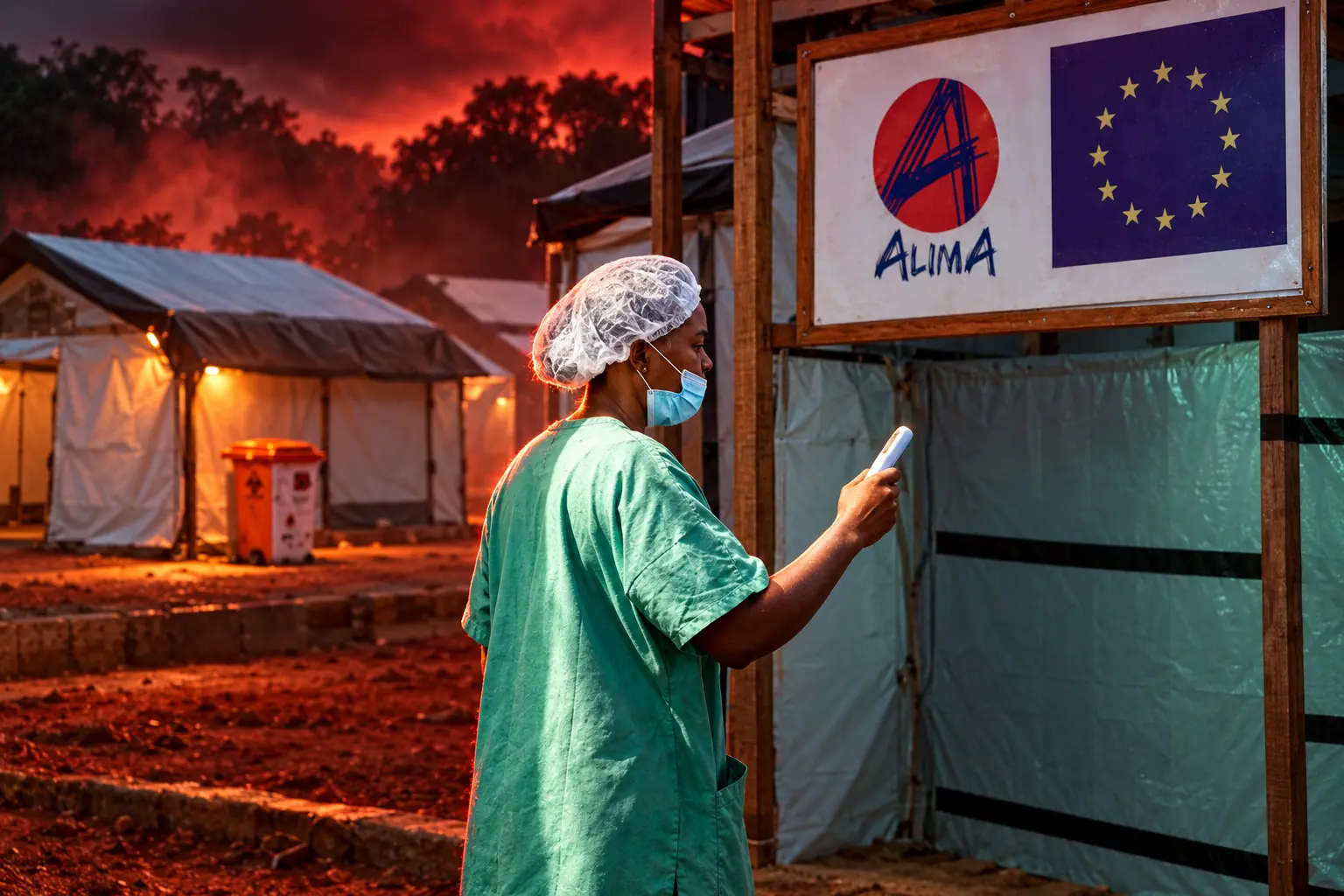
Confirmed Cases Reached 6,100 by 30 August
Congo declared the outbreak on 15 May 2026 in Ituri Province. WHO called it a Public Health Emergency of International Concern two days later. Africa CDC followed on 18 May with a continental emergency. By 30 August the emergency centre had logged 6,100 laboratory-confirmed cases and 2,950 confirmed deaths, a case fatality ratio of 48.4 percent, with 1,383 people recovered. Ituri still accounted for 5,016 of those cases, or 82 percent. Cases have been found in six of Congo’s 26 provinces and in 60 health zones.
U.S. CDC field staff, writing with data through 21 August, already called this the second-largest Ebola outbreak ever recorded, with about 5,000 cases in 100 days. A later WHO compilation around the vaccine launch put Congo at 5,794 confirmed infections and 2,786 deaths. The climb did not pause for the Kisangani ceremony.
HOW THIS OUTBREAK COMPARES
| Outbreak | Virus | Confirmed cases | Deaths | Vaccine used |
|---|---|---|---|---|
| West Africa, 2014 to 2016 | Zaire | More than 28,000 | More than 11,000 | rVSV trial late in the epidemic |
| Kivu and Ituri, 2018 to 2020 | Zaire | 3,470 | 2,287 | Ervebo ring vaccination |
| Eastern Congo, 2026 (as of 30 August) | Bundibugyo | 6,100 | 2,950 | Ervebo under compassionate use |
The 2018 to 2020 epidemic, Congo’s previous record, killed 2,287 people among 3,470 cases, a 66 percent fatality ratio, and still had a licensed matched vaccine plus monoclonal antibody drugs. This Bundibugyo wave has already passed that case count and that death count, with neither a licensed shot nor an approved antiviral. Uganda confirmed 20 cases and two deaths, 15 of them imported from Congo, and declared its outbreak over on 28 July after 42 days without a new local infection. France treated one imported case in a doctor who had worked in Ituri; that patient left hospital on 4 July.
WHO’s International Health Regulations Emergency Committee, meeting as vaccination started, warned that without a rapid change in spread the epidemic risks a scale with national and regional consequences, and called for urgent, decisive and coordinated action. Through week 15, case and death totals were already several times higher than the West Africa epidemic at the same point, according to response briefings. That speed is why Kinshasa reached for a stockpile built for a different virus.
Unpaid Staff Are First in Line for the Shots
The people being offered Ervebo first are the same people who have been walking off the job over missing pay. Julien Harneis, the senior United Nations Ebola coordinator, said in late August that 160 health workers had fallen ill and 43 of them had died. Treatment wards in Ituri have been running short of staff, gear and cash at the same time.
About 100 doctors, nurses and security staff struck at the Elikya Ebola Treatment Center in Bunia on 25 July over two months of unpaid performance bonuses. The 90-bed Médecins Sans Frontières ward stopped. Martin Bolombi, a hygiene worker on that picket, said the disease was spreading inside the centre while pay stayed frozen, and that five patients had already died still lying there. Walkouts also hit Bunia General Hospital, Mongbwalu, Nizi, Rwampara, Kasenyi and Kisangani. Some lasted only a few days. Communications minister Patrick Muyaya Katembwe said delayed payments had triggered protests and that arrears were being processed. Staff in Kisangani, where the vaccine campaign later opened, had already threatened in mid-August to shut their site if wages did not arrive.
That is the workforce now being asked to roll up a sleeve for a shot whose benefit against this virus is unproven. Kamba urged health workers to take it, saying it could protect them and help stop them carrying virus home. A compassionate-use form still requires informed consent. WHO has said people offered the vaccine, in the trial and outside it, must hear the risks, the possible benefits and the limits. In a strike-hit ward, the line between protection and pressure is thin.
How a Six-Week Lab Gap Let Bundibugyo Spread
Response teams did not start from zero. They started late, and they started on the wrong test. Modelling of the early curve put a likely index case around 1 April, about six weeks before the 15 May declaration. A patient had already been admitted to Mongbwalu General Hospital on 2 April. Local diagnostic kits in Ituri were set up for Zaire Ebola, the species Congo knows. Bundibugyo samples had to travel to Kinshasa before the rare species was named. By then the virus was in gold-mining towns, displacement sites and family funerals.
Residents in Rwampara stormed a treatment facility in May and set it alight after authorities refused to release a body. A Médecins Sans Frontières tent in Mongbwalu was burned the next day. Those attacks sit in a longer pattern. During the 2018 to 2020 Zaire outbreak, WHO documented hundreds of assaults on health sites, with 11 workers killed. The phrase that travelled then, “Ebola is a business,” has not left the east.
FROM THE FIRST CASES TO THE FIRST SHOTS
- 15 May 2026: Congo declares a Bundibugyo Ebola outbreak in Ituri Province, the country’s 17th Ebola epidemic.
- 17 May 2026: WHO declares a Public Health Emergency of International Concern; CDC activates its Emergency Operations Center.
- 14 July 2026: The EBO-PEP trial of the antiviral obeldesivir as post-exposure protection begins in Ituri, with no licensed Bundibugyo vaccine yet on the table.
- 28 July 2026: Uganda declares its linked outbreak over after 42 days without a new locally caught case.
- 7 August 2026: A WHO technical group, citing new animal data, recommends a ring clinical trial of Ervebo in Congo, not a mass rollout.
- 20 August 2026: The vaccine stockpile releases 70,000 Ervebo doses, 50,000 of them for frontline compassionate use.
- 27 August 2026: The first shots go into workers in Kisangani, Tshopo, hundreds of kilometres west of the Ituri epicentre.
- 31 August 2026: Updated WHO emergency guidance still says Ervebo should be used only inside research protocols.
Kisangani is a river city with confirmed introductions from Ituri, including travellers from Nia Nia into Wamba and Kisangani at the end of June. Opening there puts doses into a provincial capital with roads, cold chain and cameras. It also means the first 50,000 compassionate doses are not landing first in Bunia, Rwampara or Mongbwalu, the health zones that have carried this outbreak since May.
The 2018 Playbook Does Not Fit This Species
Congo already knows Ervebo. Ring vaccination with the same shot helped close the 2018 to 2020 Kivu and Ituri epidemic. A New England Journal of Medicine analysis counted 265,183 people vaccinated in 1,853 rings. A later review put effectiveness against Zaire at 84 percent in people vaccinated at least 10 days before exposure. Among patients who still got sick, death fell from 63 percent in the unvaccinated to 25 percent in those vaccinated before symptoms. More than 350,000 people in Guinea and Congo have now received the rVSV shot.
Steve Ahuka-Mundeke, a virologist at the National Institute of Biomedical Research, has argued that using it again is a two-way bet: Congo can protect people against a future Zaire wave, which is still the country’s usual Ebola, and can watch whether Bundibugyo cases fall among the vaccinated. People in Ituri have seen this vial before. That memory is an asset if the shot works even a little. It is a liability if vaccinated nurses fall ill and communities decide the 2018 vaccine was a lie.
The 2018 tools that are missing this time matter as much as the ones being reused. There is no licensed Bundibugyo monoclonal antibody. Supportive care is the treatment. A separate trial, EBO-PEP, began giving the antiviral obeldesivir to high-risk contacts on 14 July. Oxford and the Serum Institute of India have a ChAdOx1 Bundibugyo candidate that advisers said could reach efficacy testing within months, too late for the people already in isolation. The matched vaccine Congo wants does not exist in a fridge in Kisangani. The unmatched one does.
Five Control Measures Still Fall Short of Target
Shots will not close an outbreak if the rest of the response stays below the bars that ended previous ones. CDC epidemiologists abstracted Congo’s own daily situation reports for the three weeks to 21 August and found the classic Ebola controls still missing their marks, even before the first Ervebo dose went in.
CDC RESPONSE MARKERS, 31 JULY TO 21 AUGUST
| Measure | Target | Status |
|---|---|---|
| Alerts investigated within 24 hours | More than 90 percent | 83 percent (last posted 5 August) |
| Contacts listed per confirmed case | At least 20 | 10.6 |
| Daily contact-tracing completeness | More than 95 percent | 82 percent |
| New cases already known as contacts | More than 90 percent | 15 to 20 percent (last posted 12 July) |
| Validated alerts sent for lab testing | More than 90 percent | 72 percent |
| Share of lab tests that come back positive | 0 percent | 24 percent |
| Ebola treatment-unit bed occupancy | Under 80 percent | 64 percent nationally, as high as 140 percent in some zones |
| Confirmed deaths outside a treatment unit | 0 percent | 59 percent |
| Affected health zones with a safe burial team | 100 percent | 49 percent |
The contact numbers are the tell. When tracers find only 10.6 contacts per case against a target of 20, and when only 15 to 20 percent of new cases were already on a list, most infections are happening off the map. CDC staff also found that 59 percent of confirmed deaths were occurring outside treatment units. Those deaths are funerals, and funerals are how Ebola jumps. Fewer than half of affected zones had a trained safe-burial team. National bed occupancy looked calm at 64 percent; some wards were at 140 percent, which means people with confirmed infection were not all inside an isolation bed.
Eastern Congo adds a second map on top of that one. The three most affected provinces hold millions of displaced people. Armed groups cut roads. Prime Minister Judith Suminwa toured Rwampara and Mongbwalu in July, a day before the Elikya strike. Access, pay and trust are the same three problems the 2018 outbreak never fully solved. A Zaire vaccine cannot fix a tracing list that is half empty.
WHO Still Wants a Trial, Not a Campaign
On 7 August, after new animal data came in, WHO’s technical group on vaccine research said Ervebo should be prioritised for a ring randomised trial in Congo. The design copies Guinea in 2015: vaccinate contacts around a case, compare rings, read out protection as fast as an outbreak allows. The group was explicit that a trial is a step toward wider use if the shot is shown to protect people. It was not a green light to open a national campaign.
The WHO technical advisory group on vaccine research met last Friday to review new data on the Ervebo vaccine, the only licensed vaccine against Ebola virus disease.
New data from two animal studies show that Ervebo offers some protection against Bundibugyo virus disease,… pic.twitter.com/y8nvCPUjRG
— World Health Organization (WHO) (@WHO) August 7, 2026
Four days after the Kisangani launch, WHO published updated emergency guidance dated 31 August. SAGE had reviewed the extra animal, immune and observational work and still found it too weak to say whether Ervebo gives clinically meaningful protection in humans. The document recommends that the vaccine use only within research protocols. It also warns responders to keep doing the unglamorous work, surveillance, isolation, burials, and to say out loud that efficacy against Bundibugyo is unknown. Earlier SAGE language, reported from the May and August reviews, said existing evidence neither confirms nor excludes some effect, and that using the shot outside trials could create a false sense of security if vaccinated people then fall ill.
WHERE EXPERTS DISAGREE
- WHO and SAGE: Ervebo stays inside research protocols until a ring trial shows human protection; a programmatic rollout risks false confidence and, if vaccinees get sick, lasting damage to trust in Ebola vaccination.
- Congo and Africa CDC: Frontline workers should get the dose now under compassionate use, with follow-up to measure impact, because they are dying and Bundibugyo has no licensed alternative.
- Steve Ahuka-Mundeke, INRB: Do both. Give the shot in a trial and under compassionate use, since Ituri already knows Ervebo from 2018 and a Zaire wave will come again.
Kinshasa has already chosen the mixed path: 50,000 doses in workers’ arms, 20,000 in a protocol. The workers getting those first doses are unpaid, under-equipped and clustered in provinces that are not the epicentre. The guidance that says the campaign should not exist as a campaign was published after the campaign began. If Ervebo blunts Bundibugyo even partly, Congo will have bought time with a stockpile built for a different war. If it does not, the country will have spent scarce trust, and a 48.4 percent fatality ratio, on a vial that its own label says was never meant for this virus.
Disclaimer: This article is news reporting and analysis of an ongoing public-health emergency. It is for information only and is not medical advice, not a recommendation to take or refuse any vaccine, and not a clinical guide to Ebola care. Anyone who may have been exposed to Ebola, or who is offered Ervebo or another product in Congo or elsewhere, should speak with a qualified physician or the health workers running the local response before making a decision. Case counts, death totals, vaccine-trial status and official guidance change as ministries and WHO issue new situation reports, and the figures here reflect the sources cited as of their stated dates.

The Wilderness Croajingolong Protects Is a Colonial Fuel Load

Trump Rules Out a Bioweapon as Moscow Hides the Germ

Eva Marie Saint, Last Waterfront Witness, Dies at 102

Luminar’s Full Editor Comes Free for a Year on Googlebook

Sicario 3 Advances After the Original Stars Pick the Team

Sharon AI Walks an $8.8 Billion Book Into Goldman

The Agent Harness Turns Safety Into Switching Cost

Cash Still Buys Nearly One in Three U.S. Homes

Congo Rolls Out Ervebo Against a Different Ebola Virus

CDC Holds Pennsylvania Measles Deaths Off the U.S. Tally
-
 NEWS2 months ago
Sharon AI Walks an $8.8 Billion Book Into Goldman
-
 NEWS2 months ago
The Agent Harness Turns Safety Into Switching Cost
-
 BUSINESS2 months ago
Cash Still Buys Nearly One in Three U.S. Homes
-
 NEWS2 months ago
CDC Holds Pennsylvania Measles Deaths Off the U.S. Tally
-
 NEWS2 months ago
Tropical Storm Edouard Left Houston Open and Beaumont Dark
-
 NEWS2 months ago
Nationwide Bets on Data Work Before It Trusts Agents
-

 BUSINESS2 months ago
Copper’s Longest Rally Since 1994 Sits in U.S. Warehouses
-

 NEWS1 month ago
Align Research Prices Legal AI at $100 a Job