
NEWS
South Bronx Legionnaires Death Tests the Cooling Tower Law
South Bronx Legionnaires cases include one death in the same ZIP codes that produced New York’s 2015 cooling-tower law, after monthly tests began in May.

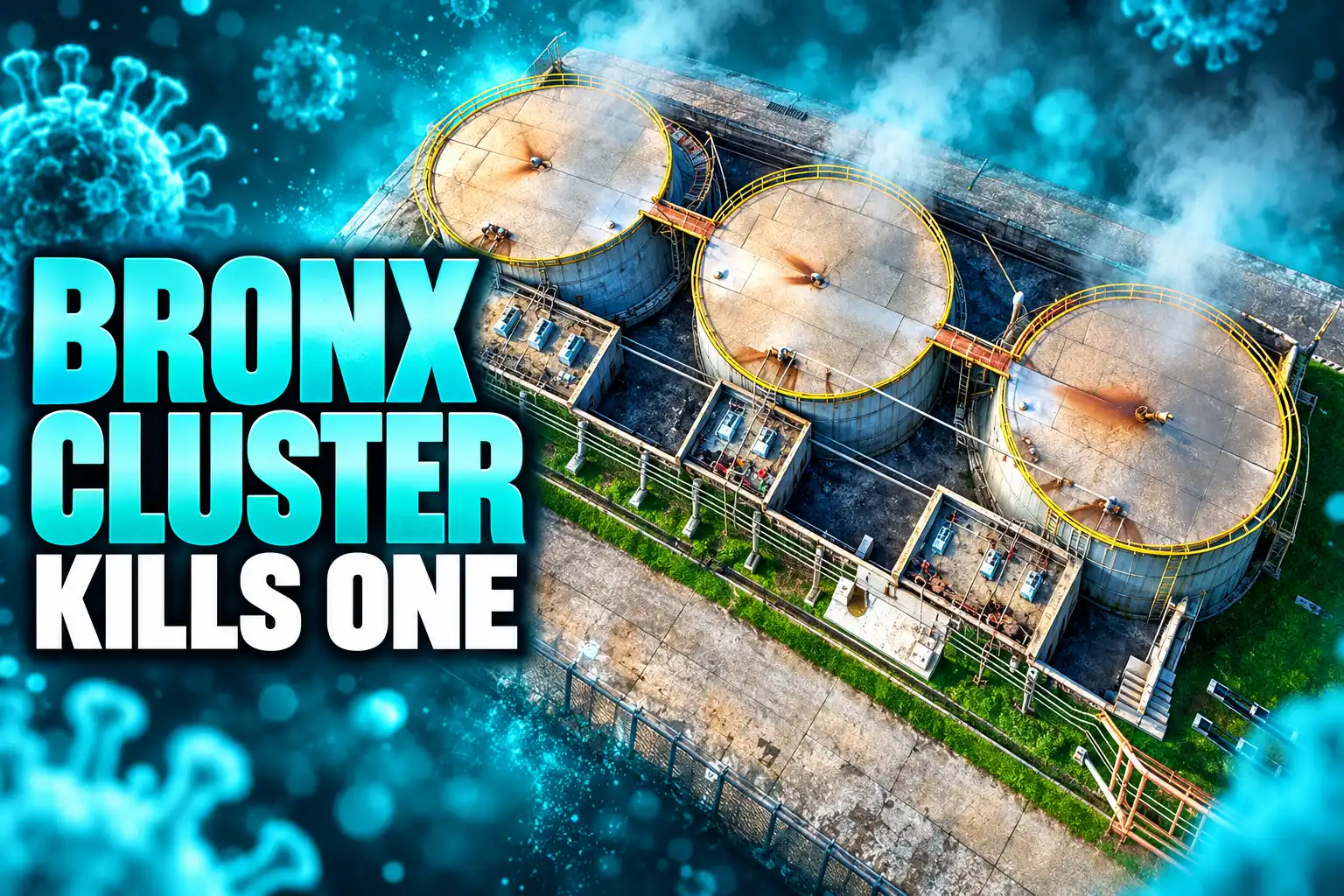
New York City health officials confirmed five Legionnaires’ disease cases, including one death, in Melrose and Morrisania on September 10. The cluster sits in ZIP codes 10451 and 10456, the same South Bronx stretch that produced the city’s cooling-tower law after the 2015 outbreak.
The Health Department likely community cluster in Melrose and Morrisania is the second of 2026, and it opened after a May rule that already made building owners culture their towers for Legionella every month. Investigators sampled about 20 cooling towers and sent the water to the public health laboratory. Those results were still pending through September 12.
Health Workers on the Stoops in Melrose
On Friday, September 11, Health Commissioner Dr. Alister F. Martin walked the cluster zone with community health workers and handed out flyers in more than one language. Anyone who lives, works, or visited the two ZIP codes since late August and has fever, cough, or trouble breathing is being told to see a clinician right away. If they need a name, the department says to call 311.
Today, our team of community health workers and I went to the Legionnaires’ cluster zone in the South Bronx to inform residents about the ways they can support their health as we investigate.
If we missed your door, please visit: https://t.co/zO72799lKe. pic.twitter.com/3abZmQXP5Q— Dr. Alister Martin (@NYCHealthCommr) September 11, 2026
Bronx Borough President Vanessa L. Gibson said her office was waiting on more detail from the department and asked residents of 10451 and 10456 with flu-like symptoms to get care without delay. Shakeema Johnson, a Mott Haven resident who spent most of a week in a hospital bed, described a cough she had never felt in her body. She is home on antibiotics. “Where is this coming from?” she said.
The department scheduled neighborhood town halls through the weekend. On Saturday, September 12, it posted a virtual session for Sunday, September 13.
Attention Melrose and Morrisania residents: We're hosting a virtual town hall on Sunday, September 13, regarding the South Bronx Legionnaires' disease cluster.
Join us at https://t.co/Y26QQFbJHE pic.twitter.com/2tei6DUk9n
— nychealthy (@nycHealthy) September 12, 2026
Martin said he knew New Yorkers would be jumpy after the Upper East Side cluster. “We are taking immediate action,” he said. Water ecologists have already finished sampling. Any tower that tests positive will be ordered to drain, clean, and disinfect at once.
Our disease investigators have confirmed five cases of Legionnaires’ disease and are working quickly to identify and confirm any additional cases in the area. Sadly, one person has died, and our deepest condolences are with their loved ones.
Dr. Alister F. Martin, NYC Health Commissioner, September 10 statement
Providers got a health alert the same day, telling them to consider Legionnaires’ disease in patients with matching pneumonia. Confirmatory results on other possible cases were still out.
The 2015 Law Was Written for These Blocks
The 2015 South Bronx outbreak covered seven ZIP codes, and 10451 and 10456 were on that list. A 2017 city health study led by Don Weiss counted 138 outbreak-related patients and 16 deaths. Median age was 55. Of those 138 people, 107 already had a chronic condition, including 43 with diabetes, 40 with alcoholism, and 24 with HIV.
Investigators tested 55 cooling towers. Whole-genome sequencing and the case map implicated one tower, later tied to the Opera House Hotel. Illness onsets ran from early July through August 3, 2015. Five of the 16 people who died never made it to a hospital.
That outbreak is why New York now tracks rooftop towers at all. Section 17-194.1 of the city administrative code, dated August 18, 2015, forced owners to register systems that had never sat on a public list. Operation and upkeep sit in Chapter 8 of Title 24 of the Rules of the City of New York. The cooling tower systems currently registered in New York now number 5,945, and that file was updated on September 10, the same day the new cluster was announced.
The machine the South Bronx forced into being is a registry, a testing calendar, and a lab queue. It is also a neighborhood memory. People on these blocks have watched this sequence before: cases, a press conference, samplers on the roof, then a wait.
Monthly Testing Met a Cluster Anyway
A city rule that took effect May 8 requires Legionella culture testing at least once a month while a tower is running, with no more than 31 days between samples. The old cadence was every 90 days. Labs must be New York State ELAP-accredited, and owners face steeper penalties for missed reports.
That rule had been live for four months when the Melrose and Morrisania diagnoses landed. Council Member Justin E. Sanchez, whose district includes both neighborhoods, did not treat the cluster as a paperwork failure. He treated it as a system that can look compliant on a dashboard and still put people in wards.
THE SOUTH BRONX COUNT
- Diagnoses: Five people in the affected area as of September 10, with more lab results pending.
- Deaths: One person has died in connection with the cluster.
- Towers sampled: About 20 cooling towers in the zone, with tests running at the public health laboratory.
- Citywide registry: 5,945 cooling tower systems on the open registration file.
Sanchez said the outbreak was alarming even with a high compliance rate in these ZIP codes. “Someone lost their life and four others are fighting for theirs,” he said, referring to the four living patients among the five diagnoses. “These folks and every New Yorker deserve a system with as few cracks as possible.”
It’s alarming to see this outbreak occur despite the high compliance rate that exists in these ZIP codes.
Justin E. Sanchez, New York City Council member, Melrose and Morrisania
Monthly cultures catch what a swab finds on a given day. They do not freeze a living tower for the rest of the month. Heat, idle loops, and a missed biocide dose can still grow Legionella between pickups. The May rule narrowed that window. It did not close it.
Mist From a Tower, Not the Tap
Legionnaires’ disease is pneumonia from Legionella, a bacterium that grows in warm water. People get sick by breathing contaminated mist, not by sitting next to a patient. The Health Department says it is safe to use air conditioners, drink tap water, and shower in the affected area unless officials say otherwise. Mist from a cooling tower disperses outside. It does not ride indoor AC, window units, or building plumbing.
The Centers for Disease Control and Prevention puts symptoms at 2 to 14 days after exposure, sometimes longer. Cough, fever, headache, muscle aches, and shortness of breath lead the list. Confusion, diarrhea, or nausea can show up too. Most healthy people who breathe the mist never get sick. The people who do are often older or already ill.
WHO FACES HIGHER RISK
- Age: People 50 and older, the group the city named first in its alert.
- Lungs and smoke: People who smoke or vape, and people with chronic lung disease.
- Other organs: Chronic heart, kidney, or liver disease, and diabetes.
- Immune system: Anyone with a weakened immune system, including from medicines or other illness.
Treatment is antibiotics, and early diagnosis changes the odds. Healthy people usually recover, but they often need a hospital bed to get there. CDC figures say about 1 out of every 10 people who get Legionnaires’ disease will die of complications. In a health-care facility, that share is about 1 in 4. There is no vaccine. The 1976 American Legion convention in Philadelphia gave the illness its name.
The Bronx cluster is not the Upper East Side outbreak sliding down the map. A cooling tower wets the air above its own roof. Two ZIP codes in the South Bronx are a local plumbing problem, the same kind of problem the 2015 law was built to police.
The Upper East Side Toll Still Stands at 11
The department identified a community cluster on the Upper East Side on July 2 in ZIP codes 10028, 10075, and 10128. It said on July 31 that the source of exposure had been eliminated. On August 28, Martin announced two more deaths in patients diagnosed earlier, bringing the tally to 94 cases and 11 deaths. He said there was no evidence of ongoing transmission and that the last remaining hospital patient had gone home.
During that investigation the city tested 183 cooling towers at 160 buildings. On July 14 it ordered 76 buildings with positive PCR screens to clean and disinfect. By July 16, all 76 had confirmed they finished. Culture tests later found live Legionella in 59 towers. Inspectors wrote 110 violations. DNA matching of patient samples to towers was still due in the fall, Martin told the City Council on September 2.
A Harlem cluster in summer 2025 killed seven people. Multiple community clusters in one season are not new here. The department itself lists two in 2015, 2017, and 2018, and three in 2016. Speed of detection is the piece that has changed. The 2015 South Bronx wave reached 138 diagnoses. The new cluster was public the same day investigators locked five.
NYC LEGIONNAIRES CLUSTERS
| Cluster | When | Cases | Deaths |
|---|---|---|---|
| South Bronx, 7 ZIP codes | July to August 2015 | 138 | 16 |
| Upper East Side | July 2026 | 94 | 11 |
| Melrose and Morrisania | September 2026 | 5 | 1 |
Martin has argued that waiting for two-week culture results before ordering a cleaning would have been slower than the PCR-first approach used on the Upper East Side. He also told the Council a citywide blanket disinfection would chew up equipment and wipe the bacterial samples investigators need to name a source. The Bronx probe is running on that same sequence: sample first, clean whatever turns positive, keep looking for patients.
Eight Bills Landed Before the Bronx Cluster
On August 5, Governor Kathy Hochul signed state legislation (S08472-A / A09058A) that adds biannual certifications in January and July, or on dates the city buildings department sets. Owners must start fixing maintenance defects as soon as possible and no later than 48 hours, and they must notify the buildings department and act within 24 hours when microbe levels pose a serious health threat. Civil penalties rise to $2,500 for a first violation, $7,000 for a second, and up to $12,500 when a violation causes a death or serious injury.
Mayor Zohran Mamdani said the city already runs the strongest cooling-tower rules in the country and welcomes tighter ones. “Keeping New Yorkers safe means preventing outbreaks before they happen by holding building owners accountable for maintaining their cooling towers,” he said. Council Speaker Julie Menin, who represents the Upper East Side, called the state bill a step and said the Council would still push its own package in September “so an outbreak of this scale never happens again.”
THE 2026 COOLING TOWER CALENDAR
- May 8, 2026: Monthly Legionella culture testing takes effect for running towers, replacing the 90-day cycle.
- July 2, 2026: Upper East Side community cluster is identified.
- July 31, 2026: The department says the Upper East Side source of exposure has been eliminated.
- August 5, 2026: Hochul signs the twice-yearly certification and 24-hour hazard law.
- August 28, 2026: Two more Upper East Side deaths are confirmed, for 94 cases and 11 deaths.
- September 2, 2026: The Council holds an oversight hearing on eight bills covering testing, fines, outreach, and unregistered towers.
- September 10, 2026: Five South Bronx diagnoses and one death are announced.
Martin told the September 2 hearing he supports a proposal that would make health and buildings staff hunt unregistered towers together. He opposed pop-up testing sites, saying Legionnaires’ disease needs a full exam, not a sidewalk swab, and that testing people with no symptoms has no public-health benefit because the illness does not spread person to person. He also pushed back on a bill that would force landlords to clean towers at least three times a year, including once in June or July.
Eight days after that hearing, the same commissioner was in the South Bronx with flyers. The bills were still bills. The cultures from about 20 towers were still in the lab.
Who Should Get Checked After Late August?
The department’s instruction is narrow and practical. Flu-like symptoms after time in 10451 or 10456 since late August belong in a clinic, an urgent-care site, or an emergency department, not on a wait-and-see list. The department page on Legionnaires’ disease is the public handout Martin pointed to when his canvassers missed a door. Diagnosis uses a urine test and, when needed, sputum or a lung wash, plus a chest X-ray for the pneumonia itself.
Public Advocate Jumaane D. Williams put the cluster in housing terms. “A central tenet of housing justice: Your home shouldn’t make you sick,” he wrote, and told people in those two ZIP codes with flu-like symptoms to get medical attention.
WHAT WE KNOW
- The count: Five diagnoses and one death as of September 10, in Melrose and Morrisania, ZIP codes 10451 and 10456.
- The work done: Cooling-tower sampling in the area is complete; laboratory testing is underway; outreach and town halls began September 11.
- What is safe: Tap water, showers, and air conditioners remain in use unless the department says otherwise; the disease is not contagious.
WHAT IS UNCONFIRMED
- The source: No building has been named, and no tower has been announced as positive.
- Extra patients: Confirmatory results on other possible cases were still pending after the first five.
- The legal package: The Council’s eight bills and the new state certification rules have not been tested against this cluster’s still-unknown source.
Sunday’s virtual town hall is the next public date on the calendar. Until the laboratory names a tower, or clears the ones it has, the blocks that wrote the 2015 law are being asked to treat a fever as a reason to get a Legionella test, not as a late summer cold.
Disclaimer: This article is news reporting on a New York City public-health investigation and is for information only. It is not medical advice, a diagnosis, or a treatment plan, and it does not tell any reader whether they have Legionnaires’ disease or whether they should start or stop antibiotics. Anyone with fever, cough, or trouble breathing after time in the affected area should speak with a licensed physician, nurse practitioner, or other qualified clinician, or call 311 to find care. Case counts, laboratory results, and official guidance reflect the Health Department and CDC materials available on September 12, 2026, and those figures and instructions can change as the investigation continues.

Jay-Z Accuser Recants, but Her Lawyer Remains Sued

Treasury Squeeze Forces Iran’s Neighbors to Cut Banks and Flights

The Kids Act Turns a Child Ban Into Age Checks

House Bitcoin Reserve Bill Would Lock Seized Coins for 20 Years

MacStories Sells the Local AI Workflow Behind iOS 27

Sharon AI Walks an $8.8 Billion Book Into Goldman

The Agent Harness Turns Safety Into Switching Cost

Tropical Storm Edouard Left Houston Open and Beaumont Dark

Cash Still Buys Nearly One in Three U.S. Homes

CDC Holds Pennsylvania Measles Deaths Off the U.S. Tally
-
 NEWS4 weeks ago
Sharon AI Walks an $8.8 Billion Book Into Goldman
-
 NEWS4 weeks ago
The Agent Harness Turns Safety Into Switching Cost
-
 NEWS1 month ago
Tropical Storm Edouard Left Houston Open and Beaumont Dark
-
 BUSINESS1 month ago
Cash Still Buys Nearly One in Three U.S. Homes
-
 NEWS4 weeks ago
CDC Holds Pennsylvania Measles Deaths Off the U.S. Tally
-

 BUSINESS3 weeks ago
Copper’s Longest Rally Since 1994 Sits in U.S. Warehouses
-

 LIFESTYLE1 month ago
Congo Rolls Out Ervebo Against a Different Ebola Virus
-

 NEWS4 weeks ago
Nationwide Bets on Data Work Before It Trusts Agents