
BUSINESS
Treasury Squeeze Forces Iran’s Neighbors to Cut Banks and Flights
A U.S. Treasury trip is cutting Iran’s bank and flight links through third countries, while China and Russia still take the planes.

Jonathan Burke spent two weeks in September 2026 warning Iran’s trading partners they could keep Tehran’s business or keep access to the dollar. The assistant secretary for terrorist financing, a former Citi sanctions chief, hopscotched the Middle East and Europe with that choice in his briefcase.
Oman, the United Arab Emirates and Turkey then cut Iranian flights, bank licenses, or both. China and Russia did not. The squeeze is landing on the airports, correspondent banks and fuel vendors that still touched Iran, and those firms are the ones changing their books.
A Former Citi Sanctions Chief Carried the Warning
Burke took the terrorist-financing job on April 14, 2026, after a Senate confirmation late in 2025. He had already done a Treasury tour from 2008 to 2012, then spent years at Citi running sanctions compliance, including a stint as chief sanctions officer for Europe, the Middle East and Africa. The department’s own biography says he oversaw that work across 55 countries before he came back.
That resume is the point of the trip. Correspondent accounts, the pipes that let a foreign bank clear dollars through New York, are a language he used to speak from the bank side of the table. Treasury officials met representatives from more than 50 countries during the campaign, and Britain has signaled it will not renew waivers that still let Iranian banks operate in London.
The legal floor under the travel is older than Burke’s new title. On September 27, 2025, the United Nations reimposed UN sanctions on Iran after France, Germany and the United Kingdom triggered the nuclear deal’s snapback. China and Russia still call that step invalid. Treasury Secretary Scott Bessent did not wait on that argument. On August 24, 2026, he launched Operation Economic Outcast, a campaign he has also called Economic D-Day, aimed at the last commercial windows that keep the Iranian state paid.
THE CAMPAIGN IN FIGURES
- Two weeks: Burke’s September run through the Middle East and Europe with a dollar-or-Tehran warning.
- Fifty-plus countries: the governments and firms Treasury says it sat with during the push.
- Thirty-six targets: the September 8 aviation round, of which 27 were Iranian airlines still in the air.
- October 1: the close of public comments on the Banque Misr UAE dollar cutoff.
The war with Iran had already passed the six-month mark when the first bank file dropped. Secondary sanctions, not a new UN vote, are doing the daily work. A foreign airport that fuels a listed jet, or a bank that still clears its tickets, can lose its own dollar accounts. That is a threat Gulf hubs take seriously, because their trade runs through those accounts. Beijing and Moscow can treat it as optional.
Bank Mellat’s Istanbul License Lasted 44 Years
Turkey’s Banking Regulation and Supervision Agency revoked the Istanbul license of Bank Mellat, head office in Tehran, in a notice published on September 18, 2026. The watchdog cited a clause of Turkish banking law that lets it pull a license if a bank’s continued work is judged a danger to depositors or to the system. The notice did not mention Washington.
The timing did. Mellat had been in Turkey since 1982, 44 years of a branch that Iranian traders actually used. Two weeks earlier, on September 4, the U.S. Office of Foreign Assets Control listed Golden Global Yatirim Bankasi and two Istanbul subsidiaries, saying the lender was built to move Iranian oil money from China into Turkey and then into cash and gold. Treasury said the bank had handled tens of millions of dollars for the Islamic Revolutionary Guard Corps Qods Force and had offered correspondent services to Iranian houses.
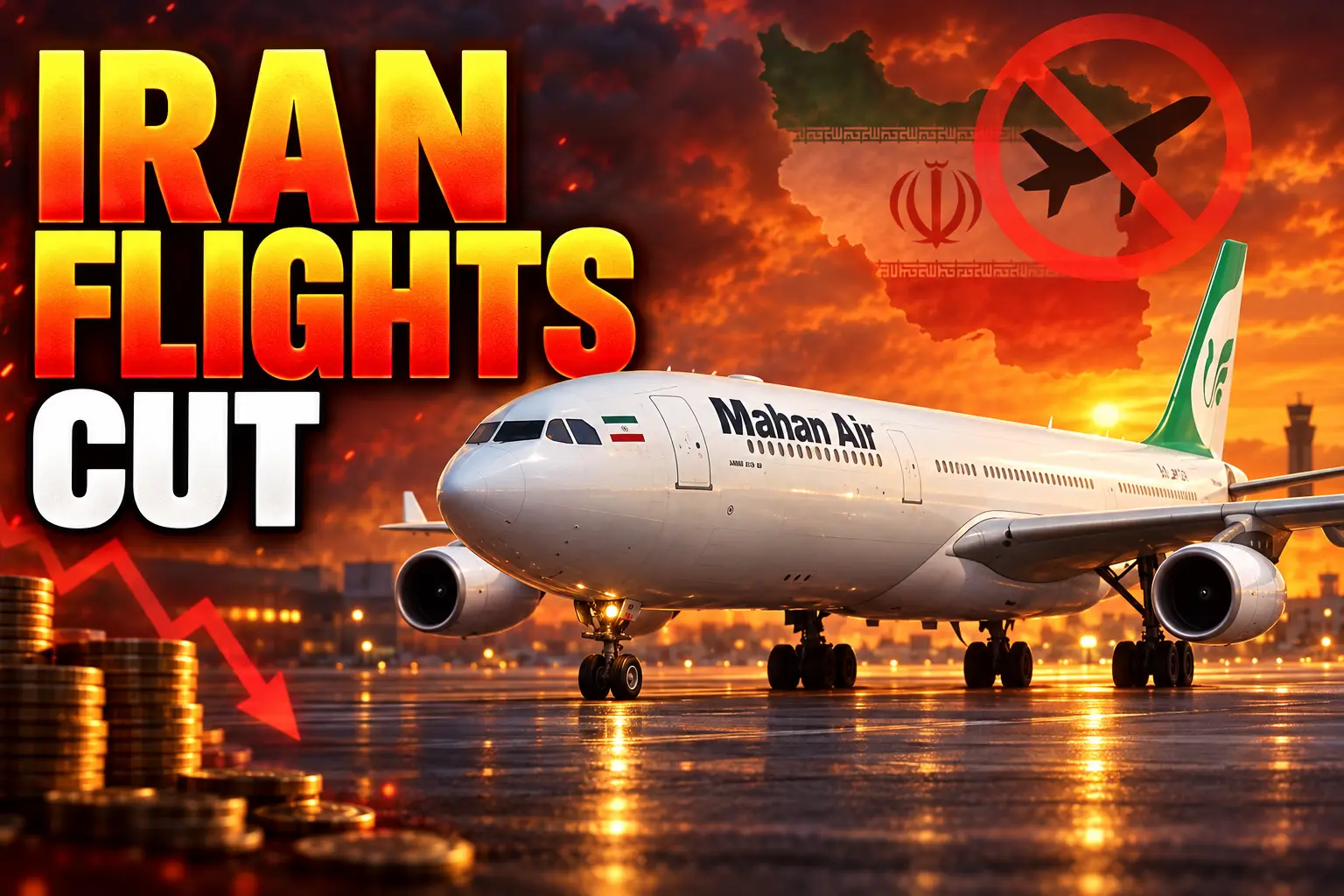
Ankara had already moved on the air side. Turkey cancelled Mahan Air, the Iranian carrier the United States has tied to the Guard since 2011, and Turkish Airlines, Pegasus and AJet pulled their own Iran schedules from September 21, with no Turkish Airlines metal listed before March 2027. A person who works the file in Ankara said the new rules bite Airbus jets as well as Boeings because the aircraft carry U.S. parts. Other Iranian airlines were still listed into Istanbul after Mahan dropped out, which is how a “ban” looks when the pressure sits on handlers and lessors rather than on every tail number at once.
How $1.8 Billion Moved Through Five UAE Branches
The dollar problem Treasury wants to kill is not an Iranian bank in Tehran. It is a foreign branch that still holds a New York correspondent. On August 28, FinCEN proposed a rule under Section 311 of the USA PATRIOT Act that would revoke Banque Misr UAE’s correspondent access to U.S. institutions. The finding covers five UAE branches of Egypt’s state-owned Banque Misr and leaves the Cairo parent and other foreign offices outside the cut.
Treasury said those branches processed approximately $1.8 billion from January 2024 to June 2026 for 103 companies it treats as possible Iranian shadow-banking fronts. The same package listed Reza Mohammad Taeedi, general manager of Bank Melli’s Dubai branch, and a Hong Kong firm accused of washing funds for a sanctioned Iranian exchange house. The Emirates had already barred local Bank Melli offices from Iran-related payments, then, later in September, shut Iranian airlines out of its airports.
The rule is still a proposal. Comments run through October 1, 2026. Until a final text lands, U.S. banks are on notice and every nested correspondent that still touches those five branches has to assume the pipe can close. That is how a Section 311 file works on a third country: the pain shows up in Dubai and Abu Dhabi, not on Enghelab Street.
Financial institutions continue to find out the hard way that we are serious about Operation Economic Outcast. While we hope no more banks will need to be sanctioned, that ultimately depends on how quickly the international community comes to its senses and ceases support of the murderous Iranian regime. We know who you are, we know where you are, and we will continue to take action together with our allies and partners until we have buried the head of the Iranian snake.
Scott Bessent, Treasury secretary, September 4, 2026 statement on Golden Global Bank
Abu Dhabi had already frozen trade with Iran in August after missiles came toward Emirati territory. The flight ban on September 24 was a second blow to a corridor that Iranian firms had used for years as a re-export desk. The banks that remain in that trade now have to show they are not the next Banque Misr UAE, and the cheap way to show it is to stop the traffic.
Fuel, Tickets and Jet Bridges Became the Pressure Point
On September 8, OFAC listed 36 targets for Iran’s aviation sector, including 27 airlines still operating, and FinCEN sent banks an alert on aircraft-parts procurement. Bessent’s line that day was aimed past Mahan Air, which the United States first listed in 2011, and at anyone still selling fuel, slots, cargo space or tickets.
Under Operation Economic Outcast, we promised severe consequences for those providing financial lifelines to the Iranian regime. Today, we followed through on that promise with sanctions on companies that continue to support Mahan Air. Let this be a warning to anyone doing… https://t.co/NPC9FMhmZu
— Treasury Secretary Scott Bessent (@SecScottBessent) September 8, 2026
OFAC also pulled authorizations that had let non-U.S. airlines fly U.S.-origin or U.S.-controlled jets into Iran, and said it would look at safety requests case by case. That is why a European or Turkish carrier with American parts in the wing cannot treat Tehran as just another slot. Bessent later put the operational rule in plainer words: if a sanctioned jet lands, the host cannot fuel it, handle it or sell its seats without risking the dollar system. He claimed 80 percent to 90 percent of Iran’s external flights had already been shut, a share that describes movements, not the shorter list of countries that still appear on departure boards.
The September 8 file also walked through a summer 2026 aircraft transfer. Mahan Air took at least three Boeing 777s that had been retired, parked through the UAE and Oman, given temporary registrations at ECT Aviation Support in the Emirates, and moved with help from Turkey’s Sky Phoenix. OFAC listed those firms, their British sibling, the Egyptian national who owns the UAE shop, and cargo and general-sales agents in Turkey, Malaysia and Kazakhstan. The jets were the payload. The third-country vendors were the target.
THE CUTOFF CALENDAR
- August 24, 2026: Bessent launches Operation Economic Outcast and adds aviation to the sectors OFAC can list under Executive Order 13902.
- August 28, 2026: FinCEN proposes cutting Banque Misr’s five UAE branches off from U.S. correspondents; OFAC lists Bank Melli’s Dubai manager.
- September 4, 2026: OFAC lists Golden Global Bank and two Istanbul units for moving Iranian oil revenue and serving the Qods Force.
- September 8, 2026: OFAC lists the remaining active Iranian airlines and the firms that fuelled, ticketed or transferred their aircraft.
- September 18, 2026: Turkey’s watchdog revokes Bank Mellat’s Istanbul license, citing financial stability, not U.S. law.
- September 23, 2026: Bessent’s service deadline hits; Baghdad, Muscat, Tbilisi and Baku drop Iranian carriers.
- September 24, 2026: The UAE’s General Civil Aviation Authority suspends all Iranian airlines until further notice.
Azerbaijan’s civil aviation agency had already cited the U.S. measures when it stopped Iranian airlines on September 22. Georgia cancelled the same week. Oman moved in two steps, first against Mahan Air, then against every Iranian carrier. Each of those decisions was made in a foreign capital by people who still need dollar clearing more than they need a Tehran route.
Which Iranian Routes Still Operate After September 23
The map did not go dark. Tehran’s Imam Khomeini boards on September 24 still showed China, Russia, Turkey, Pakistan, Armenia, Afghanistan and Tajikistan. Iranian aviation officials on September 25 still counted China, Russia, Turkey, Afghanistan, Pakistan, Armenia and Belarus among open gates after Gulf and Caucasus cities dropped off. Najaf, the last easy Iraqi substitute for Baghdad, was then suspended both ways from 02:00 on September 25.
IRAN’S INTERNATIONAL GATES AFTER THE DEADLINE
| Destination | Status | Date of the change |
|---|---|---|
| United Arab Emirates | All Iranian airlines suspended | September 24, 2026 |
| Oman | Iranian flights stopped | September 23, 2026 |
| Baghdad | Not accepting Iranian flights | September 23, 2026 |
| Najaf | Suspended both directions | September 25, 2026 |
| Georgia | Iranian flights cancelled | September 23, 2026 |
| Azerbaijan | Iranian airlines suspended | September 22, 2026 |
| Turkey | Mahan Air out; other Iranian carriers still listed; Turkish Airlines has no Iran flights before March 2027 | September 21 to 23, 2026 |
| China, Russia, Pakistan, Armenia, Afghanistan, Belarus | Iranian flights still operating | as listed September 25 to 26, 2026 |
China has called the airline measures illegal. That is consistent with how the oil trade already works. A Clingendael study of the 2025 snapback treats China as Iran’s oil lifeline, taking the bulk of sanctioned crude through small independent refiners and a discount that absorbs extra shipping risk. Dollar secondary sanctions can scare a Gulf fueler. They do not automatically reroute a teapot refinery in Shandong.
Using the dollar as a veto on third-country airports works where the host needs New York. It teaches everyone else to keep a spare rail. Iranian carriers filing six Istanbul departures in a day, while Turkish Airlines sits out until March 2027, is that split in a single hub: the local flag will not risk Airbus paperwork, and Iranian metal still uses the runway until a handler or a ministry says no.
European majors have listed Iran suspensions into late October. Qatar Airways has pointed to a possible late November return if airspace allows. Those dates can slip. The harder fact is that Dubai, Doha and Istanbul were the transfer cities for Iranian passengers heading west, and two of those three are already dark for Iranian airlines.
Iraq Now Weighs Airports Against Natural Gas
On September 26, the office of Iraqi Prime Minister Ali al-Zaidi said Baghdad was in direct talks with Washington on exempting some airports from the Treasury policy that threatens any field that hosts or helps Iranian flights. The same day, Adnan Faihan al-Dulaimi, Iraq’s first deputy parliament speaker, called the flight curbs hasty and said unilateral U.S. sanctions were not an automatic Iraqi legal duty.
Mohammad Mokhber, an adviser to Iran’s supreme leader, framed the air file as a regional all-or-nothing. Flights in the region, he said, are “either free for everyone or for no one.” Mohsen Rezaei, secretary of Iran’s Supreme National Security Council, had already warned that Tehran would not leave neighboring cooperation with the U.S. measures unanswered, including talk of striking airports. Iranian President Masoud Pezeshkian has said the sanctions are biting and that Tehran will still resist.
WHAT BAGHDAD HAS ON THE TABLE
- Airport exemptions: Al-Zaidi’s office is asking Washington to carve out some Iraqi fields from the secondary-sanctions threat on handling Iranian flights.
- Pilgrim traffic: Faihan said the curbs hit religious tourism through Baghdad and Najaf and asked who pays airlines, hotels and travel desks when the seats vanish.
- Power risk: He warned Iraq could lose 30 percent to 40 percent of available electricity if Iran stopped sending natural gas.
- Legal cover: He argued any ban needed an Iraqi statute or a binding international duty, not a Treasury deadline on its own.
Majid Akhavan, spokesman for Iran’s Civil Aviation Organization, had tried to keep Iraq open by shifting Baghdad flights to Najaf. That workaround lasted until September 25. Overland paths through Turkey and Armenia are already picking up travelers who used to connect in Istanbul or Dubai. Those buses do not restore a bank license or a 777 part.
FinCEN is taking comments on the Banque Misr rule through October 1, while Iraqi officials bargain for airport exemptions and Iranian jets keep filing plans for Istanbul, Guangzhou and Moscow.

Jay-Z Accuser Recants, but Her Lawyer Remains Sued

Treasury Squeeze Forces Iran’s Neighbors to Cut Banks and Flights

Align Research Prices Legal AI at $100 a Job

Trump Offered Putin a Trade Prize to End Ukraine’s War

Singapore’s Prime Minister Gets the Raise He Will Not Keep

Sharon AI Walks an $8.8 Billion Book Into Goldman

CDC Holds Pennsylvania Measles Deaths Off the U.S. Tally

Tropical Storm Edouard Left Houston Open and Beaumont Dark

Copper’s Longest Rally Since 1994 Sits in U.S. Warehouses
Align Research Prices Legal AI at $100 a Job
-
 NEWS3 weeks ago
Sharon AI Walks an $8.8 Billion Book Into Goldman
-
 NEWS3 weeks ago
CDC Holds Pennsylvania Measles Deaths Off the U.S. Tally
-
 NEWS4 weeks ago
Tropical Storm Edouard Left Houston Open and Beaumont Dark
-
 BUSINESS3 weeks ago
Copper’s Longest Rally Since 1994 Sits in U.S. Warehouses
-
 NEWS3 weeks ago
Align Research Prices Legal AI at $100 a Job
-

 NEWS3 weeks ago
The Agent Harness Turns Safety Into Switching Cost
-

 LIFESTYLE4 weeks ago
Congo Rolls Out Ervebo Against a Different Ebola Virus
-

 BUSINESS4 weeks ago
Cash Still Buys Nearly One in Three U.S. Homes